From the archive. This story describes the announcement at its original publication date. Product availability, pricing and terms may have changed.
At a glance
- What changed
- Brazilian card launch.
- Who it affects
- Readers comparing funding routes.
- When
- 6 November 2025
OKX Card discount code and conditions ↓
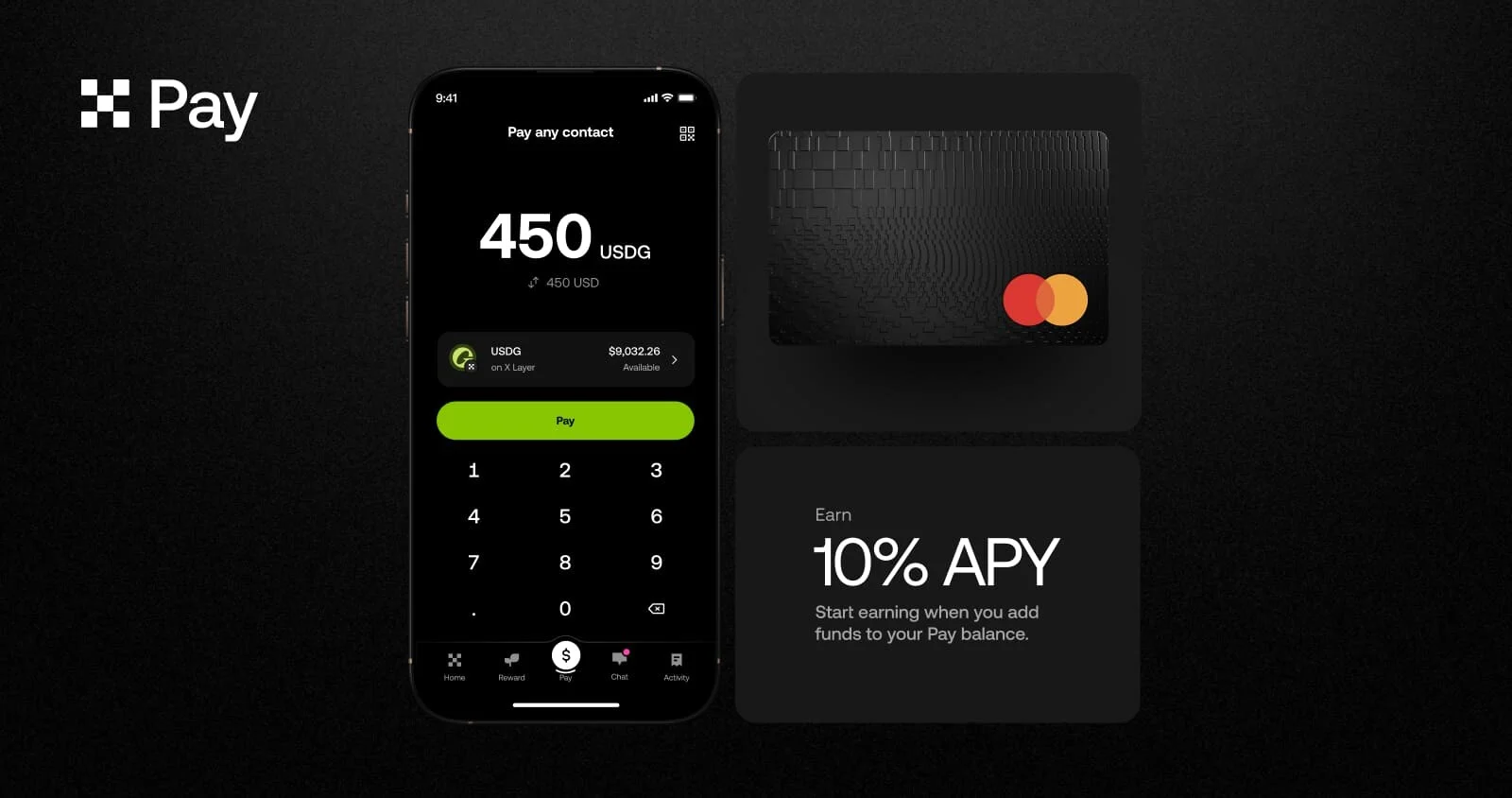
OKX linked Brazil's PIX funding with a dollar-based card
OKX announced Pay and Card in Brazil on 6 November 2025. The release connected PIX funding in Brazilian reais with digital-dollar balances and a USD Mastercard linked to OKX Pay. It also described Apple Pay and Google Wallet support and local onboarding using Brazil's digital driving-licence verification.
The launch promoted yield, tax and foreign-exchange benefits as part of its offering at that time. Those claims are historical, not current guidance. The concrete product news was a path from local funding to a balance that could support international card purchases.
[1]A digital-dollar balance and a real-denominated budget differ
A traveler may think about a trip in euros while earning income in reais and holding part of the budget in dollars. A product connecting those currencies can make the payment sequence more convenient, but it does not remove the need to know which currency measures the person's budget.
Consider someone who decides that a trip should cost no more than a certain amount of monthly income. For that person, the real-denominated outlay is the starting point. A later dollar balance may feel stable when measured in dollars while changing in value relative to the currency used for rent and salary. The same number can therefore answer different questions depending on the unit beside it.
A hypothetical funding decision before a trip
Suppose a traveler converts R$2,000 into an imaginary 400-unit dollar balance, ignoring charges to isolate the arithmetic. The assumed conversion rate is five reais per dollar. If the traveler later values those 400 units at 5.5 reais per dollar, the displayed value becomes R$2,200. At 4.5 reais per dollar, it becomes R$1,800.
Nothing in the example requires the number of dollar units to change. The movement comes from the exchange rate used to express them in reais. These are invented rates, not OKX quotes or forecasts. They explain why holding a foreign-currency-linked balance is a different budgeting decision from merely selecting a card for a purchase.
If the trip is cancelled, the traveler may care about converting the remaining balance back into the currency used at home. The original reason for holding dollars no longer applies, and the return conversion becomes a new decision with its own quote. A smooth initial funding flow does not determine the outcome of that later conversion.
A purchase can add a third currency to the route
Now imagine a €100 purchase during a trip. Assume, only for illustration, that it requires 110 dollar units from the travel balance. Under the earlier five-reais funding assumption, those units originally cost R$550. If the traveler instead compares the purchase with a current rate of six reais per dollar, the same 110 units appear to represent R$660.
Both calculations have a purpose, but they are not interchangeable. The first describes the historical funding cost under the example's assumptions. The second describes a current conversion value. A useful travel record should state which one is being used, particularly when comparing a trip with a budget prepared weeks earlier.
This also explains why a card statement and a bank-funding record may show different currency amounts without either being wrong. The records capture different stages. Understanding the route means connecting those stages, rather than expecting the merchant receipt to contain every prior conversion.
What the launch made easier, and what it did not settle
The practical attraction of the Brazilian launch was a more direct connection between a familiar local payment method and an international spending balance. For a customer already planning travel or foreign-currency purchases, reducing separate account transfers can make the process easier to follow.
The product still needs to be evaluated through the quote and terms attached to the customer's actual action. A reward percentage, an advertised exchange benefit and a statement about tax are different kinds of claim. Combining them into one assumed saving would make the result less clear, especially when the source is an older launch page.
The November announcement should therefore be read as a dated expansion of payment access in Brazil. Its useful lesson is the sequence from local funding, through a chosen balance currency, to a merchant payment. A reader can understand that sequence without treating the launch's largest promotional numbers as permanent terms or assuming that every customer's total cost will be identical.
Dates to know
As announced by the provider. A listed date does not confirm current availability or eligibility.
- Brazil launchDate passed[1]
Compare invented funding quotes
An original hypothetical exercise. Select a case.
| Case | What it means |
|---|---|
| First quote | 100 units arrive Assume a 500-unit local payment produces 100 spending units. |
| Second quote | 102 units arrive For the same invented input, 102 spending units gives two more. All other conditions must be comparable. |
Illustration only; it does not check an account or predict a result.
Official sources & further reading
Independently written from the primary sources below. Checked on 26 September 2026.
- Bringing Stablecoins to Everyday Life in Brazil: Introducing OKX Pay and OKX Card ↗Announcement · 6 November 2025
20% off eligible OKX trading fees
Card cashback is a separate benefit. The code does not change card pricing or establish eligibility for EU products.
Permanent code and partner link. Campaign dates and benefits are separate.
We may earn a commission, at no extra cost to you. Account and country conditions apply.