This campaign has ended. This article preserves the original announcement and its conditions for reference.
At a glance
- What changed
- Expired travel campaign.
- Who it affects
- Readers checking summer purchases.
- When
- 17 July 2026
Bybit Card welcome offer and conditions ↓
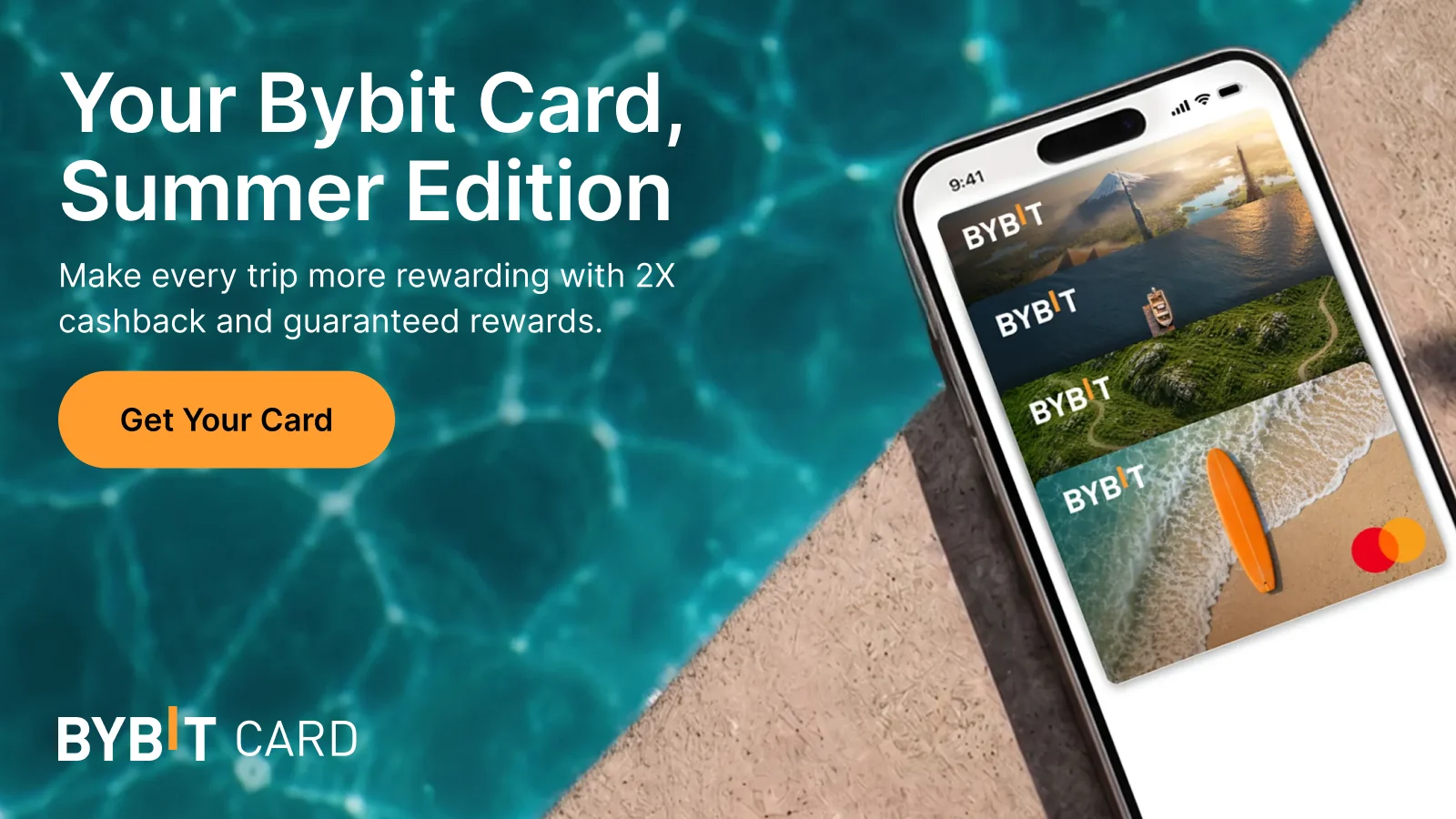
Bybit EU's summer travel promotion has expired
Bybit EU ran its Summer Travel Event from 17 July 2026 at 10:00 UTC until 17 September at 23:59 UTC. Registered participants could earn 5% cashback on qualifying overseas card purchases, subject to a €50 cap.
The announcement required eligible purchases outside the EEA in non-EEA currencies that incurred foreign-exchange fees. It explicitly excluded transactions in its listed EEA currencies, including euros and Swiss francs. Separate mission-based Card Bonus rewards had their own conditions. The promotion ended before this article's September review; its 5% headline is not a current card-wide reward rate.
[1]Geography and billing currency are different tests
A trip abroad does not automatically produce a qualifying transaction. The country where a customer stands, the currency shown by a merchant and the card's settlement currency can all differ. A promotion that refers to several of those facts needs them checked separately.
Consider a traveler outside the EEA who is offered a choice between the merchant's local currency and a euro-denominated price. Both choices concern the same purchase in the same shop, but the payment records may describe different currency routes. The location alone does not explain which campaign condition is satisfied. The historical offer was narrower than “all spending while on holiday.”
An illustrative cashback calculation
Assume a traveler makes €600 equivalent of purchases that satisfy every campaign condition. At the stated 5% rate, the gross campaign cashback would be €30. If qualifying spending reaches €1,000, the same calculation reaches €50. Beyond that point, the overall cap prevents this particular promotional component from continuing to grow.
Suppose the traveler then makes another €400 equivalent of eligible purchases. Multiplying the full €1,400 by 5% gives €70, but the cap leaves the campaign reward at €50. The effective campaign percentage across that total is about 3.57%. These figures explain the limit; they are not evidence that any specific transaction or account qualified.
The distinction becomes especially useful when comparing an advertisement with an account history. A customer may remember the advertised percentage while forgetting that earlier purchases already used most of the allowance. The remaining cap is a necessary input to any estimate for a later payment.
Foreign-exchange costs belong in the comparison
A reward on a foreign-currency transaction should be considered alongside the costs of making that transaction. To keep the example explicit, assume a €200-equivalent purchase would produce €10 of campaign cashback and incur an invented €4 of relevant conversion costs. The net difference from those two components is €6, not €10.
Change the assumed conversion cost to €12 and the same reward would leave a €2 cost after the rebate. Those invented amounts do not describe Bybit's fee schedule. They demonstrate why the reward percentage alone cannot establish the cheapest payment choice.
A traveler also needs comparable merchant prices. If one payment option charges a higher underlying price before the card processes it, a cashback calculation based on the same nominal amount may conceal that difference. The useful comparison follows the complete amount paid for the same goods, with any reward included only when the conditions are actually met.
How to read the campaign after its end date
For a past participant, the article can help reconcile an old trip. Start with the campaign registration and the completed payment records, then separate qualifying purchases from excluded ones. Compare the calculated reward with the remaining allowance and keep mission bonuses in their own category. That separation makes it easier to understand which part of an expected benefit did or did not arrive.
For a new customer, the expired promotion is evidence of a previous offer, not something that a signup code can revive. The limited-edition card design and the campaign reward also have different roles: the design identifies a product presentation, while the reward depends on dated rules.
The event's useful lesson is how a travel offer combines location, currency, fees and a maximum allowance. It can look simple in a headline while requiring several facts to line up for each purchase. A clear archive should preserve those facts and the end date, so the promotion remains understandable without being mistaken for an active, universal benefit.
Dates to know
As announced by the provider. A listed date does not confirm current availability or eligibility.
See the announcement calendarTest an assumed travel reward
An original hypothetical exercise. Select a case.
| Case | What it means |
|---|---|
| Gross calculation | €15 reward At an invented 3% rate on €500, the gross reward is €15. |
| Include a cost | €7 difference Subtract an invented €8 conversion cost and the difference is €7, before other expenses. |
Illustration only; it does not check an account or predict a result.
Official sources & further reading
Independently written from the primary sources below. Checked on 26 September 2026.
- Earn 5% cashback this summer with Bybit Card ↗Announcement · 17 July 2026
10 USDC card signup bonus
Spend 100 USDC within 30 days. Extra €10 and cashback boosters are separate promotions with their own conditions. EEA card program (bybit.eu); Croatia and Ireland consistently excluded, Malta excluded from the welcome promo.
Permanent code and partner link. Campaign dates and benefits are separate.
We may earn a commission, at no extra cost to you. Account and country conditions apply.