From the archive. This story describes the announcement at its original publication date. Product availability, pricing and terms may have changed.

fomoDiscount code
10% off all trading fees
fomo referral code: findcodes. Sign up with this code to get 10% off all trading fees.
Affiliate link. We may earn a commission, at no extra cost to you.
At a glance
- What changed
- Perpetual contracts join fomo’s mobile app.
- Who it affects
- Eligible non-US users; protocol restrictions apply.
- When
- Launched 11 June 2026; terms checked 20 September.
Add Exchange.news as a preferred source on Google
Perpetuals join the existing app
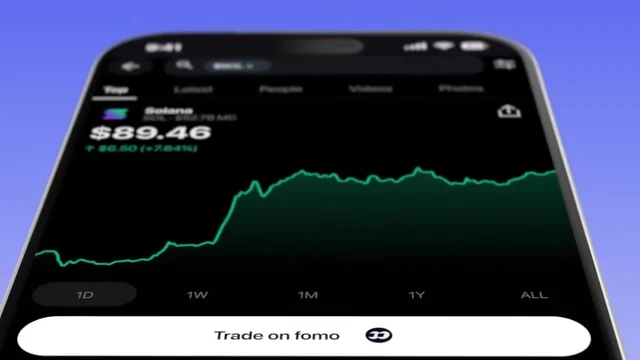
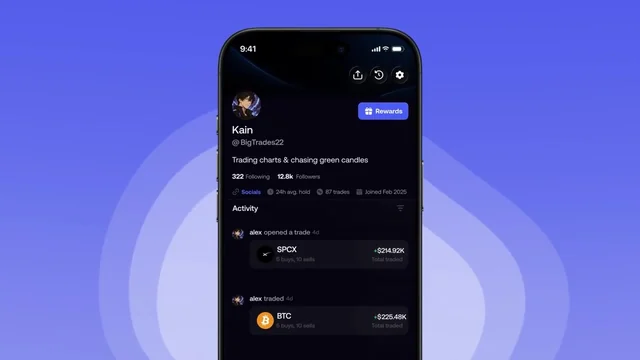
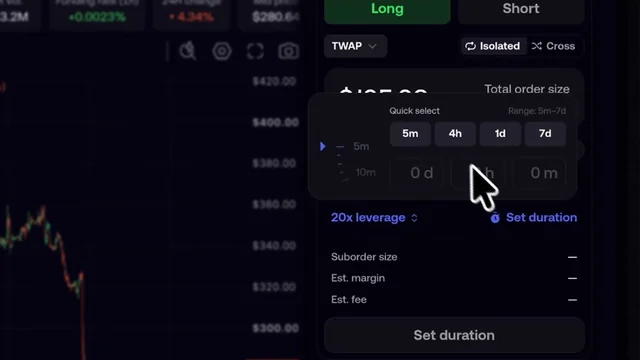
fomo launched perpetual-contract access on 11 June 2026, powered by Hyperliquid and Trade[XYZ]. The release covers crypto, equity, index, commodity and pre-IPO reference markets. Initial positions use isolated margin, with long or short direction, leverage and position size visible in the interface. Take-profit and stop-loss tools join the charts, while positions connect to profiles, feeds and other social features. Access is unavailable to US persons or from within the United States.
A contract does not confer ownership of its reference asset
fomo’s terms say third-party protocols offer, match and settle these contracts; fomo is not the trading counterparty. A perpetual is a derivative referencing another asset’s price. It does not deliver shares, voting rights, dividends or ownership of the referenced asset. An equity-themed contract therefore should not be described as buying company stock.
The terms also identify protocol-driven funding, liquidation and possible forced reductions of positions. Execution and availability are not guaranteed, and non-crypto markets may have different backstop arrangements. The US restriction includes citizenship and permanent residency, not simply the country shown on a device. These conditions are material to understanding who can use the feature and what a position represents.
Read exposure and supporting capital separately
Imagine an eligible person opening a fictional long contract with five hundred dollars of price exposure and one hundred dollars supporting it. A long position benefits from a rise in the reference price under the simplified assumptions of this example. A two-percent rise would produce a ten-dollar gain before trading costs and funding. Relative to the supporting hundred dollars, that is ten percent.
A two-percent fall would instead produce a ten-dollar loss before those costs. The example uses a simple linear relationship solely to explain exposure. It does not calculate a liquidation threshold or reproduce a particular Hyperliquid or Trade[XYZ] contract. The actual contract’s rules and account state determine what happens as its margin becomes insufficient.
Now suppose the person sees “five hundred” on a position card and assumes that is the cash originally placed behind the trade. They would misunderstand the sensitivity of their hundred-dollar contribution. Conversely, reading only the contribution would understate the price exposure. Both figures matter because they describe different parts of the same position.
A social post can hide a crucial difference in direction
Consider two fictional traders referencing the same asset. One is long and the other short. If the reference price falls, the same market move affects them in opposite directions before costs. A feed item that is read only for the asset name could therefore be badly misunderstood. Direction is part of the trade, not decorative detail beside it.
Position size also changes the meaning of a visible result. A twenty-dollar gain on a small position and the same gain on a much larger position are different outcomes relative to exposure. A reader interested in another person’s reasoning needs the time, direction and size as well as the headline profit. Even then, the reader would be considering a new decision at a new moment.
For example, a trader might already have reduced most of an earlier position while a reader is just discovering its original post. Repeating the initial direction would not reproduce the trader’s current exposure. That is why a social interface is most useful as a way to inspect a sequence of actions, rather than as a shortcut that makes the sequence irrelevant.
What the mobile launch makes easier
The product change brings contract controls and social context into the app where users already discover assets. That can reduce the number of interfaces someone needs to inspect, but the underlying operations still have different meanings. Reading a post, opening a contract and closing a contract are separate actions with separate results.
A clear review of a proposed position starts with the actual instrument: what price it references, whether it is long or short, how much exposure it creates and what supports that exposure. The launch announcement explains the new interface. The protocol and service terms explain the contractual boundaries. Together they give a reader a more accurate account of the feature than treating every familiar asset name in the app as the same kind of ownership.
Dates to know
As announced by the provider. A listed date does not confirm current availability or eligibility.
- Perpetuals launchDate passed
fomoDiscount code
10% off all trading fees
fomo referral code: findcodes. Sign up with this code to get 10% off all trading fees.
Affiliate link. We may earn a commission, at no extra cost to you.
Conditions
Type findcodes inside the app during signup; it cannot be added later.
The code and partner link have no expiry. Campaign dates, benefits and eligibility are separate and may change. Check the provider’s current terms before signing up.