At a glance
- What changed
- Trezor explains its setup check.
- Who it affects
- Buyers of older Trezor models.
- When
- Response posted 14 October.
Trezor partner offer and conditions ↓
Trezor distinguishes counterfeit units from added implants
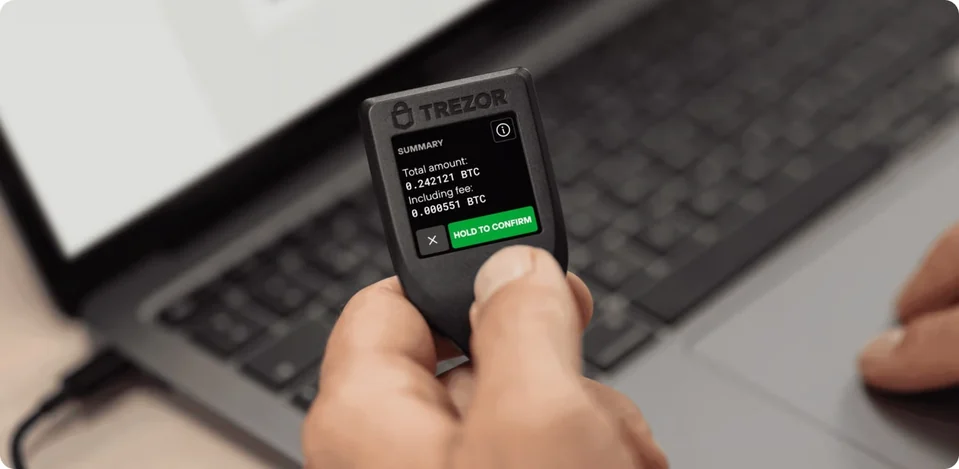
Trezor said on 14 October 2026 that the older counterfeit wallets discussed in its response to researcher Joe Grand had their main control chip replaced. Its official reply concerns Model One and Model T units bought through unofficial sellers. The chip, called a microcontroller or MCU, runs the device’s software. Trezor says its Suite setup checks detect these altered devices, and says it knows of no way to apply this particular attack to current Safe models. Those are the company’s statements; the reply does not establish that physical tampering is impossible. The relevant distinction is how a wallet was altered.
Why the randomness inside the wallet matters
The control chip matters because wallet creation depends on unpredictable starting data. That randomness is called entropy. Trezor’s documentation describes Model One and Model T as combining randomness from the connected computer or phone with a hardware random-number generator inside their microcontroller. Replacing that component therefore concerns a part involved in creating the wallet, rather than merely changing the appearance of its packaging.
The wallet backup expresses the starting information as words. The same starting information produces the same keys and addresses when the wallet is reconstructed; that consistency makes recovery possible. It also explains why predictable starting data is dangerous: an attacker who can reproduce it can recreate the keys. Careful storage of the resulting words cannot make their original generation less predictable. This is why a check of wallet creation answers a different question from whether a buyer has kept the backup private afterward. It examines the process that produced the wallet in the first place.
The automatic check and its warning
Trezor’s entropy-check guide specifies device software, or firmware, version 1.13.1 or later for Model One and 2.8.7 or later for Model T. These are existing compatibility requirements.
Suite verifies discarded candidate wallets against their generation inputs. The final wallet is kept without revealing its device-generated contribution in that checking flow. If verification fails, Suite stops setup and warns that the device may be compromised. Trezor instructs the user to stop using that device and contact support. Its guide lists several possible causes, including counterfeit hardware, hardware faults and software defects. A warning alone does not identify an attacker.
Backup formats do not authenticate the hardware
Trezor’s backup guide lists a 24-word default for Model One and a 12-word default for Model T. Both use BIP39, a standard for representing wallet-backup information as a list of words. The guide says the security associated with these formats depends on the starting information being genuinely random. A familiar word count therefore does not establish that the device followed a trustworthy generation process.
A backup restores access when a device is lost, damaged or reset. Compatible hardware or software reconstructs the existing wallet from that information. This gives the words a different job from a creation-time device check: they preserve access to keys already established. Trezor’s guide calls for keeping the backup offline and private. Protecting those words remains necessary, but their successful use for recovery cannot establish where the original device came from or whether its chip was genuine.
Older models still have a separate support schedule
Trezor’s reply also points to the retirement of Model One and Model T from its own store. The company’s product-support page puts that sales change on 8 January 2026. It says remaining stock may be sold by official resellers for a limited time. That is a sales-channel change, which should be separated from whether a genuine device continues receiving support.
The published schedule promises critical security updates for both models until at least 2036, basic maintenance until at least 2031, and new coin support for Model T until at least 2031. Security fixes, maintenance and additional asset support have different stated horizons. The page says existing owners do not need to replace a device merely because direct sales ended. That general lifecycle guidance does not authenticate an individual unit bought from an unofficial seller. Buyers still need to distinguish the model’s support status from the provenance of the particular device.
Open-source hardware wallets
No public discount code is attached. Any store promotion has its own terms.
Conditions
The partner link has no expiry. Campaign dates, benefits and eligibility are separate and may change. Check the provider’s current terms before signing up.
We may earn a commission, at no extra cost to you.