From the archive. This story describes the announcement at its original publication date. Product availability, pricing and terms may have changed.
At a glance
- What changed
- Card ordering in Kraken.
- Who it affects
- UK and EEA readers.
- When
- 13 July 2026
Krak discount code and conditions ↓
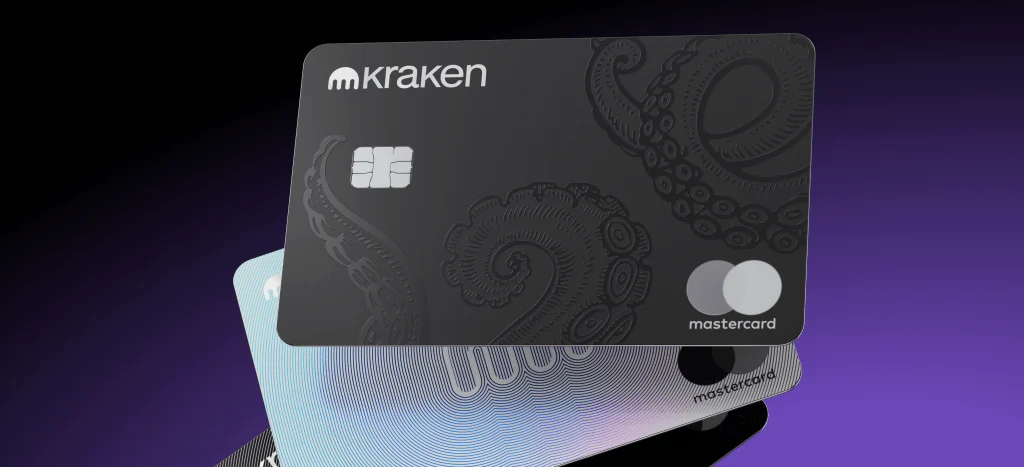
Kraken put card ordering inside its exchange app
Kraken announced card ordering for eligible UK and EEA customers on 13 July 2026. Customers could order in Kraken and manage the Mastercard in Krak using the same login. The launch linked more than 600 supported balances to spending and promoted up to 2% rewards dependent on average holdings. It disclosed conversion spreads and possible third-party ATM charges. The change connected an exchange account to a card; it did not make every payment free.
[1]The spending balance is narrower than the account total
Krak's card FAQ explains that Spend Order determines which assets fund a purchase and can combine eligible balances. Assets blocked by the user or unavailable for card use do not count toward the card's spendable balance. The FAQ also says refunds return in the card's primary currency instead of automatically restoring the crypto originally sold.
For UK cards that primary currency is pounds; for European cards it is euros. The document says conversion into that currency occurs when a transaction is authorized. These details, checked in September 2026, explain why holding a merchant's currency somewhere in the account does not necessarily eliminate every currency conversion.
[2]Two apps can still represent one payment journey
A customer beginning in an exchange app may expect all later card controls to remain there. The July design instead gives ordering and ongoing management different homes. The useful way to understand the journey is by task: finding the offer, applying, selecting a funding order, reviewing a purchase and resolving a card issue.
The shared login can reduce one source of friction, but it does not make the tasks identical. A person looking for a card transaction should know where its details live, just as someone viewing a trading order needs the relevant trading history. The improvement is strongest when the handoff between those tasks is clear enough that the customer does not need to guess which screen controls the payment.
A hypothetical purchase across two balances
Suppose a customer wants to make a €90 purchase and has an invented spending order that uses euros first, followed by a second eligible asset. Assume there are €60 in the first balance. The remaining €30 must then be covered by the next permitted funding source, under whatever conversion quote applies.
Now suppose the customer has deliberately blocked that second asset. The total account value might still be far above €90, but the payment plan has changed. The blocked holding is no longer part of the amount the person has made available for spending. This example shows why a total portfolio value and a spendable amount answer different questions.
A thoughtful funding order can make that distinction intentional. A customer may want routine shopping to use a modest cash budget while leaving a longer-term holding untouched. The card's convenience should be judged partly by whether the completed record makes that preference easy to verify, rather than only by how quickly the terminal approves the payment.
A refund can restore purchasing power without restoring a portfolio
Consider an invented €100 purchase funded by selling ten units of a token at €10 each, ignoring charges solely to simplify the example. The merchant later refunds €100. If the token now costs €12.50, buying back ten units would require €125. The original cash amount has been returned, but recreating the former token position would need €25 more.
If the token instead costs €8, the €100 refund would buy 12.5 units. Either way, the customer should distinguish reversing the merchant charge from reversing subsequent market movement. The refund amount is not a guarantee that the old investment position can be reconstructed at the same cost.
That is the practical context for the July launch. Bringing a card closer to an exchange balance can remove a manual step before spending, while each purchase still has a funding source, a conversion record and a possible later adjustment. The news is useful to readers who want those everyday tasks connected, provided the connection remains understandable when a purchase is refunded or an asset is intentionally excluded.
Rebuild a hypothetical token holding
An original hypothetical exercise. Select a case.
- Price rises
€125 needed
A €100 purchase sold ten tokens at €10. At an invented later €12.50 price, replacing ten costs €125.
- Price falls
€80 needed
At an invented later price of €8, replacing the same ten tokens costs €80.
Illustration only; it does not check an account or predict a result.
Official sources & further reading
Independently written from the primary sources below. Checked on 26 September 2026.
- Your Kraken balance, ready to spend: the Kraken Card is here ↗Announcement · 13 July 2026
- Krak Card Frequently Asked Questions ↗Documentation
20% off Kraken trading fees
The code discounts exchange trading. Krak cashback is a separate card benefit with its own terms.
Permanent code and partner link. Campaign dates and benefits are separate.
We may earn a commission, at no extra cost to you. Account and country conditions apply.